Keynote Speakers

Prof. Yunhao Liu
Professor & Academician of the Chinese Academy of Sciences
Tsinghua University
Keynote Title
Embodied Intelligence of Things
Biography
Yunhao Liu, ACM Fellow , IEEE Fellow, Chair Professor at Tsinghua University. Yunhao received Hong Kong ICT Best Innovation and Research Award Grand Prize 2007, Second Class National Natural Science Award 2011, ACM Presidential Award 2013, CCF Wang Xuan Award 2022, China Ministry of Education First Class Technological Innovation Award 2023, China Ministry of Education First Class Natural Science Award 2025, as well as many best paper awards including ACM MobiCom 2014 best paper award, ACM SenSys 2021 Best Paper Award, SIGCOMM 2021 Best Student Paper Award, and ACM SenSys 2023 Test of Time Award and IEEE PerCom 2026 Test of Time Award.

Prof. Chiranjib Bhattacharyya
Professor & Fellow of Indian Academy of Engineering
Indian Institute of Science (IISc)
Keynote Title
[Title to be announced]
Abstract
[Abstract to be announced]
Biography
Prof. Chiranjib Bhattacharyya is a Professor in the Department of Computer Science and Automation at the Indian Institute of Science (IISc). He completed his postdoctoral research at the University of California, Berkeley, and is a Fellow of the Indian National Academy of Engineering. His research focuses on the foundations of machine learning, convex optimization, and autonomous systems, with an emphasis on applications to industrial problems. His work has been recognized with several best paper honours, including the SDM 2011 Best Paper Award and the PAKDD 2009 Runner-Up Award.

Prof. Weiru Liu
Professor & Chair of Artificial Intelligence
University of Bristol
Keynote Title
Agents before and after LLM Revolution: Comparing and synergizing symbolic and neural approaches
Abstract
The study of agents and multi-agent systems (MAS) has been a cornerstone of AI research for over four decades. Recently, this foundational field has experienced a renewed interest driven by the rapid advances in large language models (LLMs), leading to a surge in research and application of LLM-based agents. In this talk, I will compare symbolic/logic-based agent systems with the emerging paradigm of LLM-based agents, focusing on their approaches to planning and belief/knowledge management. By contrasting the two paradigms, we aim to identify synergies that can advance the development of more robust and scalable agent systems. I will also briefly highlight challenges in developing LLM-based agent systems and touch upon advanced research addressing some of these challenges.
Biography
Professor Weiru Liu holds the Chair of Artificial Intelligence (AI) at the University of Bristol. Currently, she is a Co-Director of the EPSRC Centre for Doctoral Training in Future Autonomous and Robotic Systems: Towards Ubiquity (FARSCOPE-TU, 2019-2028). She is also a Co-Investigator on the ESRC-funded Centre for Sociodigital Futures (2023-2028), where she leads research into the social implications of AI and the importance of social science in designing future AI technologies. Prior to joining the University of Bristol in 2017, she held the Chair of AI at Queen’s University Belfast (QUB).
Nationally, she was a member of the UK EPSRC ICT Strategic Advisory Team (ICT SAT, 2017-2023); a member of the UK Higher Education Research Excellence Framework (REF2021) Institutional Environment Pilot Panel, and a Turing Fellow at the UK Alan Turing Institute (2021- 2023). Internationally, she was a reviewer of the Research Ireland Investigators Programme 2025, a member of Academy of Finland AI and Data Science Review Panel (2020-2021), and a member of the international committee for Independent Research Fund Denmark (DFF) - Digital Technologies (2019).
Her research has been centered on developing intelligent autonomous systems (e.g., agent-based systems). With this overarching goal, her research topics include but are not limited to: symbolic and LLM agents; explainability; online planning; machine learning; multi-source, multi-model event modelling, reasoning and correlation in uncertain environments. Supported by external funding bodies with accumulated funding exceeding £58 million, her work has been applied across a wide range of fields, including cyber-physical system security, healthcare, robotics, and fraud detection. Her publications can be viewed from DBLP link https://dblp.org/pid/l/WeiruLiu.html
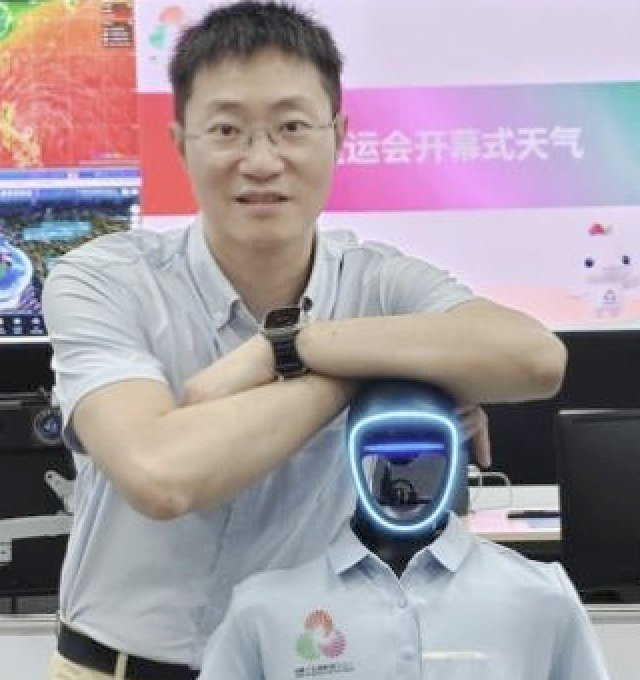
Prof. Weishi Zheng
Professor
Sun Yat-sen University
Keynote Title
Beyond Single-Robot Embodied Intelligence: Human-Robot Interaction and Closed-Loop Multi-Robot Collaboration
Abstract
Existing research on embodied intelligence predominantly focuses on single-robot manipulation, which suffers from limited capabilities when deployed in complex real-world scenarios. This work conducts explorations toward multi-robot embodied intelligence. Through the transfer of physical perception and interactive patterns, human-human interaction data are leveraged to realize natural, robust human-robot interaction. Furthermore, we propose a decoupled interaction framework and a multi-agent closed-loop system, enabling cross-morphology robots to autonomously form teams, allocate tasks, collaborate and execute missions in a closed-loop manner, thereby breaking through the capability bottlenecks of individual robots. This talk will present our latest research advances and practical achievements in human-robot interaction, multi-robot coordination, and cross-morphology embodied intelligence.
Biography
Dr. Wei-Shi Zheng is currently a Full Professor at Sun Yat-sen University. His primary research interests cover embodied artificial intelligence, multi-agent system learning, and continual learning. He has served as Area Chair / Senior Area Chair for numerous top-tier conferences. He serves as an Associate Editor and editorial board member for IEEE TPAMI, Artificial Intelligence, and Pattern Recognition. He once participated in the Microsoft Research Asia Young Faculty Visiting Program. His academic honors and fellowships include: Cheung Kong Distinguished Professor, IAPR Fellow, recipient of the Excellent Young Scientists Fund (NSFC), and holder of the Royal Society Newton Advanced Fellowship (UK).